
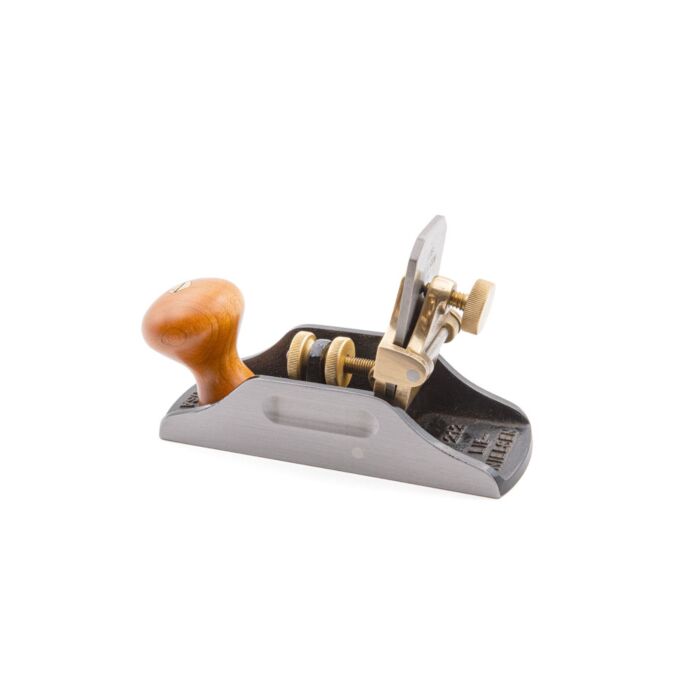
Lie-Nielsen No. 212 Small Scraping Plane, Iron

Out of stock
No. 212 Small Scraping Plane
This unusual plane is based on the now scarce Stanley No. 212, which was discontinued in 1934 and brings high prices from today’s collectors. We are pleased to make it available for woodworkers once again.
The almost perpendicular blade makes it ideal for small scraping jobs, producing shavings like the finest lace and leaving smooth surfaces with crisp edges. The blade angle can be adjusted from 75° to 100°, enabling it to be set up just right for the particular wood being worked.
- 5-1/2" long x 1-3/4" wide.
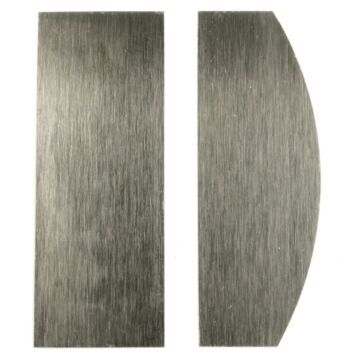
- Blade is 1-3/8" wide x 1/8" thick.
- Iron body, 1.60 lbs.
Shipping and returns
Standard shipping in Italy: €9.90 incl. VAT.
For international shipments, the website calculates the rate at checkout.
For packages over 30 kg, contact us for a quote.
Returns: you have 10 days from receipt to exercise your right of withdrawal. Upon delivery, always check the packaging integrity and, if damaged, write "accepted with reservation" on the courier's delivery note.
Complete your purchase
Description / Lie-Nielsen No. 212 Small Scraping Plane, Iron
Sharpening:
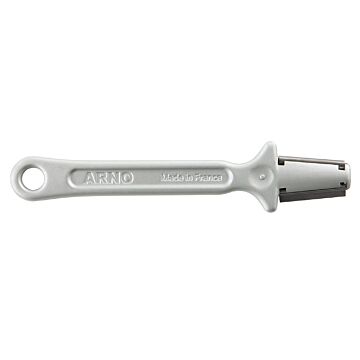
Lie-Nielsen Scraping Plane comes with a much thicker blade than the original. This allows the blade to be prepared differently than other scrapers. We have found that our Scraping Plane blades sharpen easily and produce a better surface with a 45° bevel, honed to a sharp edge like a plane blade. Honing a secondary bevel of 5° will help achieve a razor edge quickly. We do not recommend using a burr, at least until you get used to using the tool. Slightly rounding the corners of the blade with a stone will prevent them from marking the work.
Burnishing:
If you wish to create a burr, hone the blade, and then clamp it upright in a vise. Using a burnisher, begin by holding the burnisher at about 45° to the blade, working up to 75°. Work the edge until you can feel a distinct ‘hook’ all the way across. Be very careful not to cut yourself on the upright blade. Use of a burr will give more aggressive cutting action, and depending on how consistent you are, turning the burr will require adjustment of the blade angle after sharpening to work best.
Adjusting the Blade Angle:
The blade angle is adjustable and should be set about 15° forward of vertical. Try adjusting the angle to find optimum performance in various woods. One way to get it close is to take some test passes holding the blade by hand, varying the angle until it cuts best, then hold the blade at that angle against the side of the plane and adjust the frog to match. The beveled faces of the nuts fit into the countersink on the hole in the post to provide a solid lock.
Setting the Blade:
Normally, one pushes the Scraping Plane from the rear with the knob in the palm. The blade is inserted with the bevel facing the knob. To set the depth of cut, lay the sole of the tool on a flat surface and loosen the thumbscrew. Press lightly on the top of the blade with your thumb and re-tighten the thumbscrew. Do not over tighten. Usually, this will be enough exposure for a fine shaving. If not, repeat with a slip of paper under the front of the tool. Minor depth adjustments may also be made quickly by lightly tapping the top of the blade with alight hammer while the tool is resting on a flat board.
It is best to use a light touch, rather than trying to remove too much material at once, or using too much downward pressure. Too aggressive a cut, including too much downward pressure, will result in chatter. You should be taking light passes. Often it is helpful to scrape at an angle to the grain, then again from the opposite angle.
Toothed Blades:
We offer toothed blades of 25 teeth per inch, useful when working extremely difficult woods, by scoring fibers in a criss-cross pattern before using the regular blade. It is also used to prepare surfaces for gluing, as in veneering, by lightly roughening the surface.